
What We Overlook
What Late Autumn Reveals

Hello,
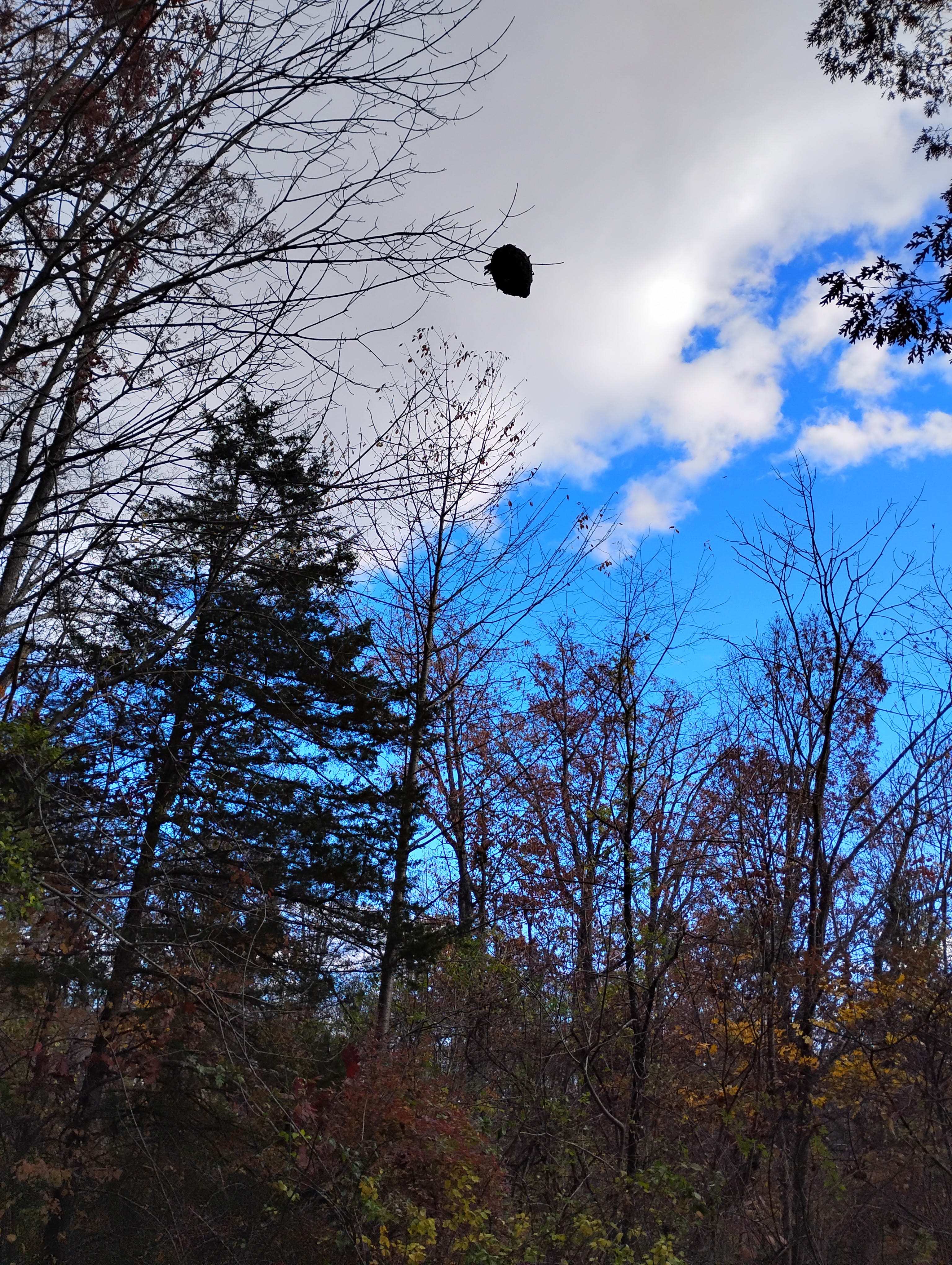
After heavy rain or strong winds, trees often shed their fall colors quickly, revealing a transformed landscape. Fields of abandoned pumpkins, desirable just a couple of weeks before, are left to rot in the fields. The golden stubble from harvested corn fields, once hidden behind stands of leafy trees, is now visible. And a wasp’s nest securely hanging from a delicate branch stands out against a puffy, white cloud on the edge of our yard. For years, my mom had two abandoned wasp nests on display in their garage, which couldn’t be missed as you went from the car to the mud room. They were hung with clear fishing line and push pins to a large farmhouse-style cupboard that housed baseball bats, gloves, and other sporting equipment. They were not preserved with polyurethane or varnish; they remained intact on their own as examples of the ingenuity of nature.
Wasps pollinate crops that flower early in the season, and they also feast on garden pests such as aphids, making them a welcome addition to a garden. Honey bees die after they have stung you, but wasps have retractable stingers and live on. Their nests are made of paper pulp, created when they chew wood fibers mixed with their saliva. The only wasp that survives the winter is a queen wasp, but she abandons the nest. The virgin queens go off to mate with wasp drones before the onset of winter. She finds a good spot to hibernate for the cold months, carrying eggs and stored sperm to start a new colony in a new nest. The rest of the wasp colony dies in the autumn.
My mom would wait until there had been a couple of frosts before retrieving a nest, both for her own safety and to ensure that it had been vacated. When I spotted the nest, high up in a tree, I asked my husband if he could either lasso it or rent a crane to get it down. He thought a better option would be to involve the arborist who will be topping off some trees, but he has yet to appear. After spotting the nest, an article appeared in the New York Times about the trend among certain city-dwellers to purchase nests, sometimes for several hundred dollars, to display like sculptures in their apartments. Most looked pretentious and perfectly ridiculous in my estimation. Hopefully, the arborist will retrieve the nest for me before the snow hits, and I can casually display the nest and appreciate the clever handiwork of the wasps.
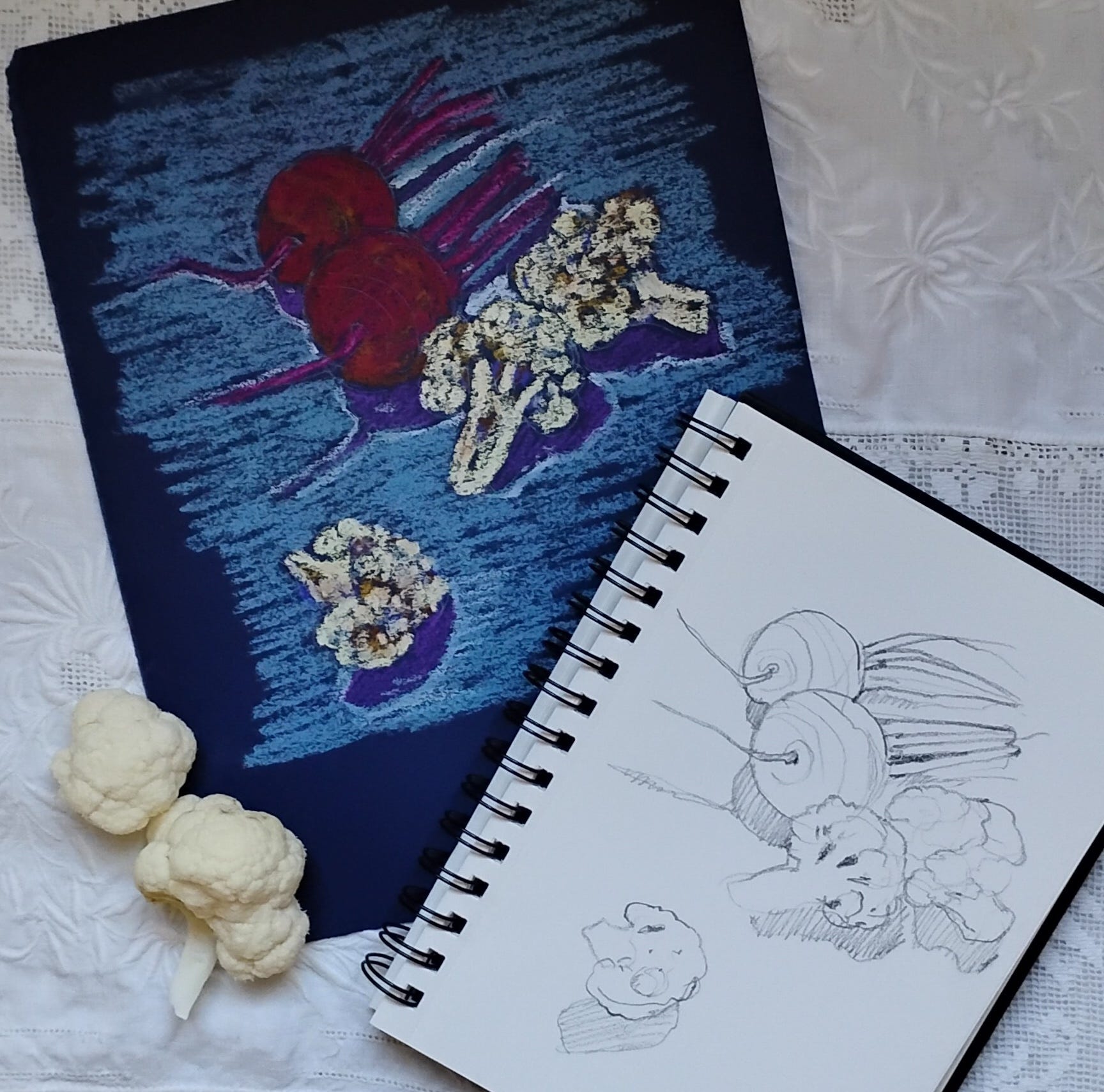
Another surprise that appeared at the beginning of the month was the gigantic heads of creamy white cauliflower. They weighed in around four pounds each and were so pristine that they looked as if they had been picked by the farmer and delivered by hand to the supermarket. I am generally not a big cauliflower fan, but I was drawn to these oversized heads. I remembered that cauliflower is often present in Indian cuisine and decided that a recipe with its aromatic spices might change my opinion. I buy fresh beets year-round at my supermarket, but when a fellow shopper asked how I cooked them, I realized that many people may overlook them. The green leaves are a bonus and a delicious addition to a salad. The lovely magenta roots are easy to boil until fork-tender while maintaining their flavor.
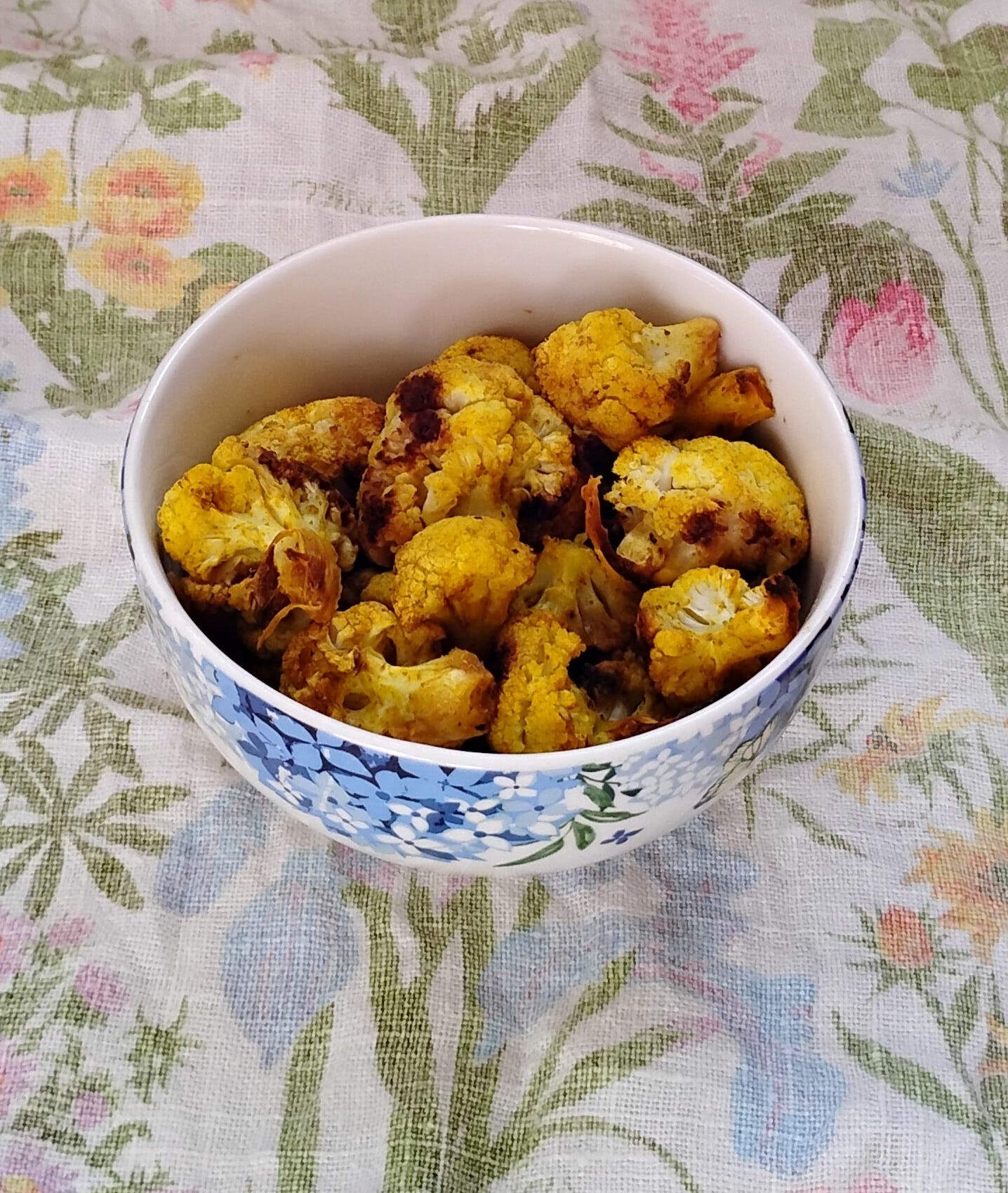
Spicy Roasted Cauliflower
Ingredients
2 lb. head of cauliflower, divided into florets
2 T. olive oil
salt and pepper
1 t. turmeric
1 t. cumin
1 t. coriander
1/2 t. cardamom
1/2 t. garlic powder
Directions
Preheat the oven to 425 degrees. Toss the florets with the olive oil in a large bowl. Sprinkle lightly with salt and pepper. In a small bowl, combine the remaining ingredients. Use a large spoon to coat the florets with the spices. Spread on a baking sheet and bake for about 45 minutes.
Two pounds is a lot of cauliflower. We had it right from the oven on the first night, zapped it for another meal, and I even liked it cold!
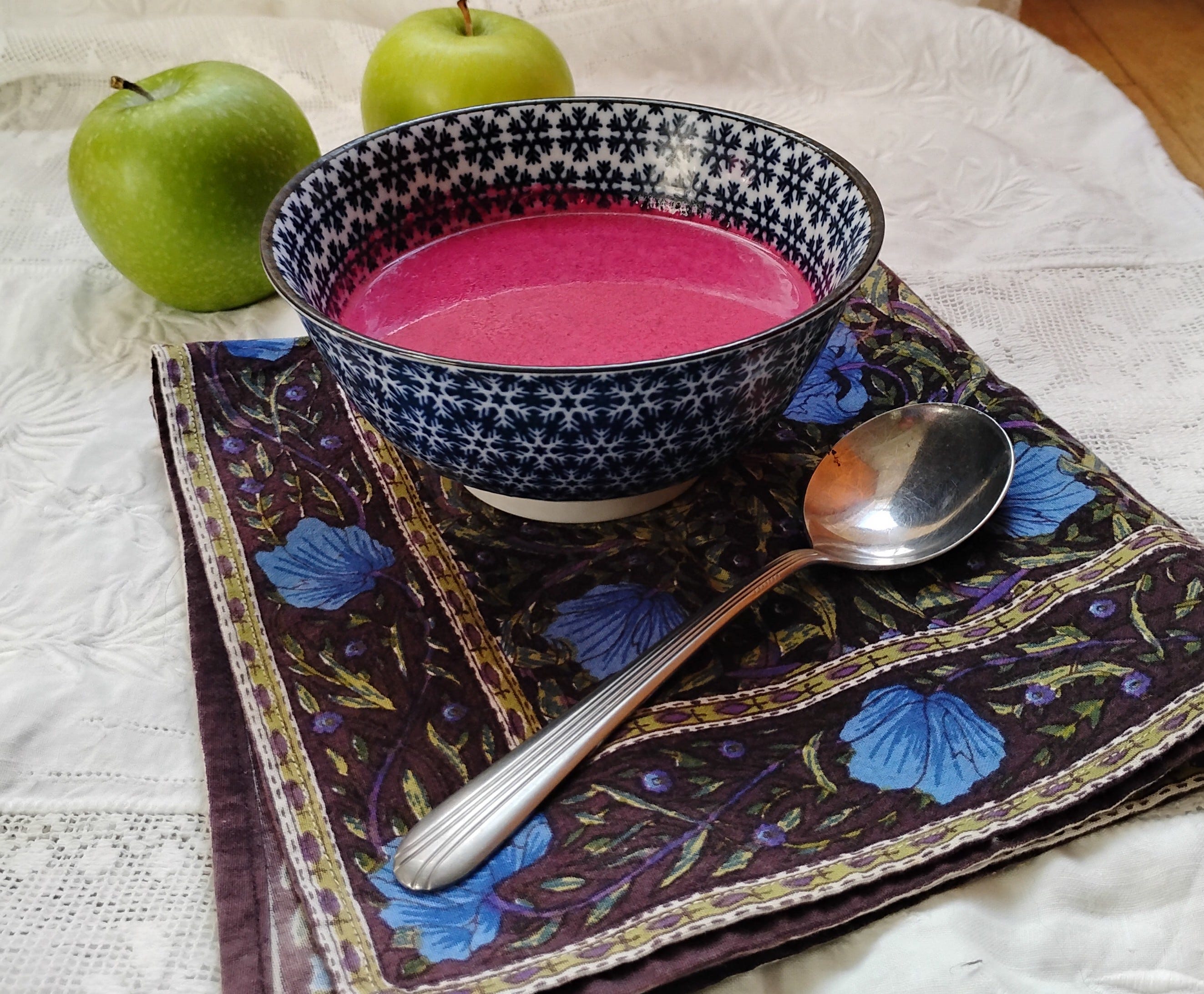
Beet, Apple, Ginger Soup Puree
Ingredients
3 1/2 cups cooked, chopped beets (about 6 medium beets)
2 T. olive oil
1 yellow onion, chopped
2 t. fresh ginger, peeled and minced
2 cloves garlic, minced
2 cups peeled, chopped Granny Smith apples
3 cups vegetable broth
1 can of lite coconut milk
Directions
Cut the green tops off the beets and discard or save for salads. Thoroughly wash the beets. Place the beets in a large saucepan covered with water. Bring the beets to a boil and simmer until fork-tender, about 45 minutes. Pour the beets and water into a colander. Once the beets are cool enough to handle, the skins will peel away using your hands. Coarsely chop the beets.
In a soup pot, sauté the onions in the oil for about five minutes, or until they have begun to brown. Add the garlic and ginger for an additional one minute. Add the stock to the pot. Cook the apples until they are tender. Add the beets to the pot and simmer for about ten minutes. Pour everything into a food processor, in two batches if necessary, or use an immersion blender. Return the pureed soup to the pot and add the cream from the top of the coconut milk. Blend. Add the rest of the coconut milk; omit this step if you want a thicker soup. Stir to blend. Heat through.
Serve the soup immediately or store it in the fridge until ready to use.
This is a nice starter soup, and the garlic works well with both the apple and the beets. And the color is spectacular!
Thanks for reading, liking, commenting, and sharing! I do appreciate it.
Vicki
Wasp nests as sculpture???! Don't they know (my pest guy says) wasps are attracted even to defunct nests
I enjoyed this love letter to late autumn, along with two seasonal recipes and the story of a wasp nest. Beautiful illustrations too.