
Grapefruit and Split-Levels

Hello,
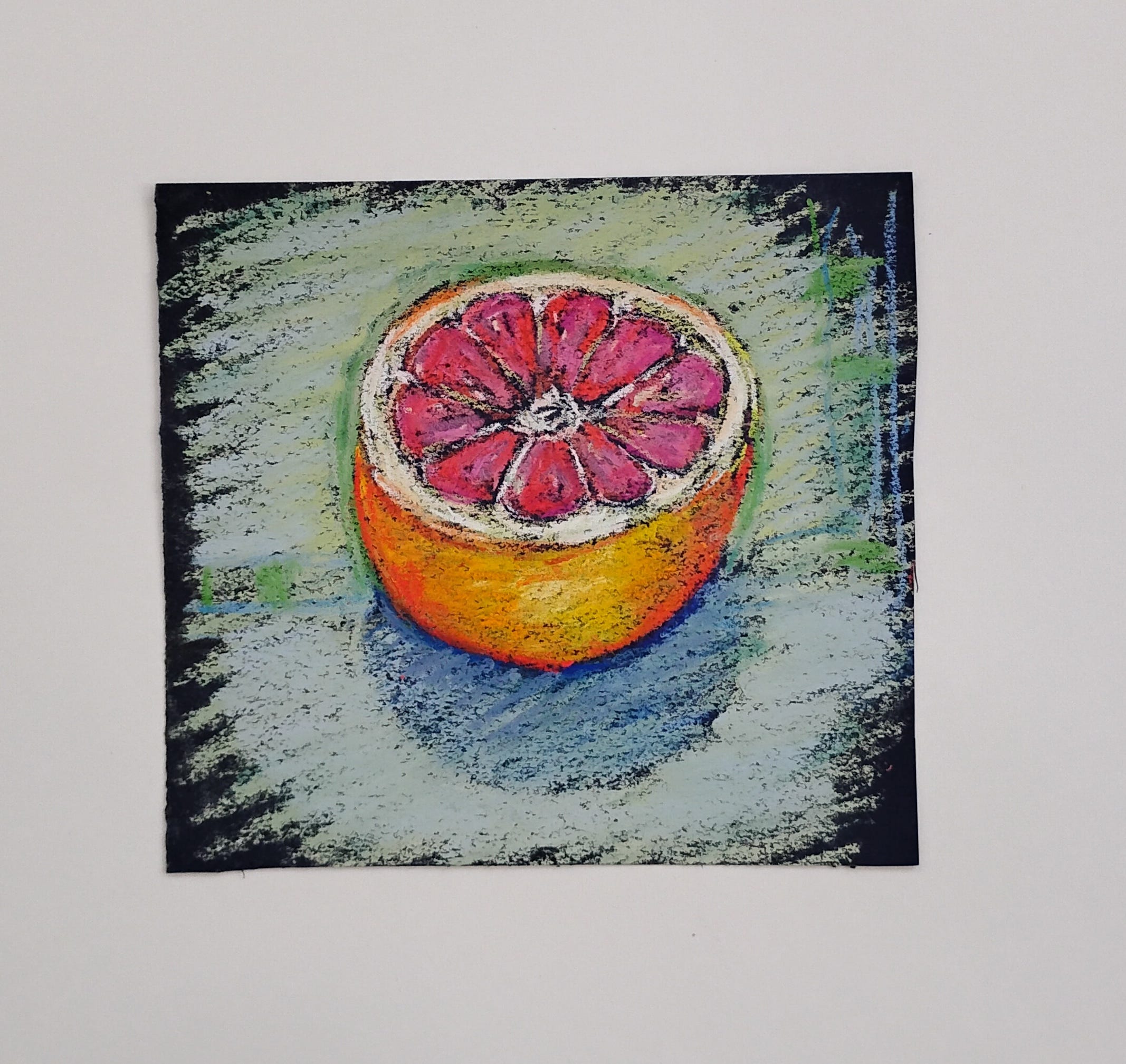
Winter is the peak season for enjoying citrus at its prime, and since it is also the season of the common cold, its vitamin C is beneficial. I tend to reach for a bag of clementines and stock up on lemons and limes rather than purchasing grapefruit at the grocery store. Although not entirely necessary for its consumption, grapefruit has its own special spoon with a pointed end and serrated edges, making it easier to scoop sections from a grapefruit half. There are even designated bowls to keep the grapefruit from slipping and sliding. A half grapefruit with a maraschino cherry in the center for decoration was once the quintessential diner breakfast food.
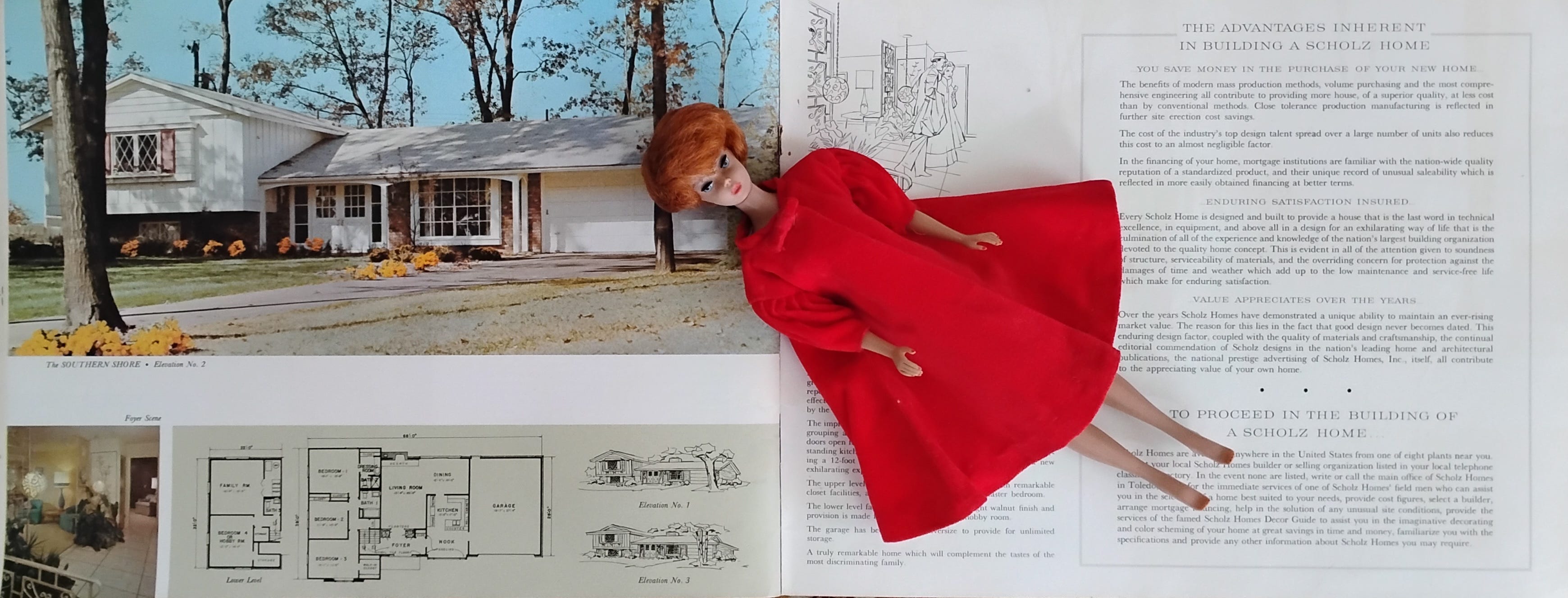
In the same way that clever marketing trains us to associate a color with a brand, red with Netflix, for instance, I associate grapefruit and that shade of yellow, perhaps with a tinge of peach, with the 1960s. It was the era of the grapefruit as the perfect diet food to be eaten with every meal, with the claim of burning calories, exercise not required. It was also the era of the split-level home, whose designs were inspired by the architect Frank Lloyd Wright. Their open floor plans with different levels separated by short staircases also provided a sense of privacy. I grew up in a split-level that my parents built, and it evoked the 1960s in the same way that my Barbie Dream house with its yellow interior walls did. The fixtures in one of the bathrooms were a grapefruit yellow, the double front doors were an inviting pale turquoise, and window benches ran the length of the two picture windows. In contrast to the ubiquitous stainless appliances of today, the refrigerator and dishwasher had wood veneer doors. The lower level housed a playroom with a TV and a piano, far enough from the kitchen that my mother did not have to be disturbed by noise from either when making dinner.
No famous paintings of split-level homes come to mind in the way of Edward Hopper’s desolate, lonely Victorian houses or Andrew Wyeth’s rustic, weathered, and equally lonely structures. Perhaps this is because by the 1960s, representational art was passé, or because aesthetically, they have not withstood the test of time. At least in my own kitchen, I can bring the grapefruit into the modern era.
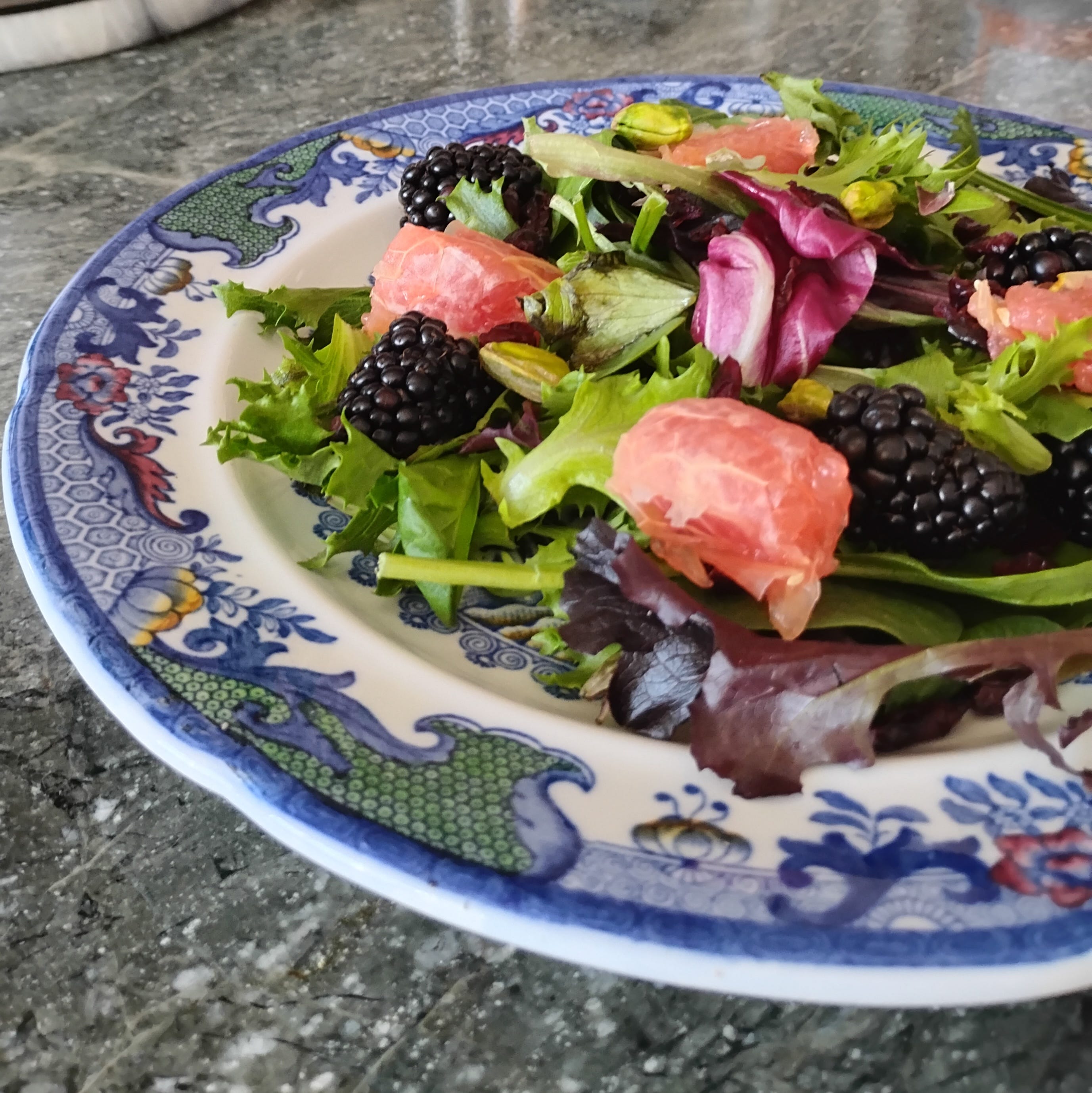
Baby Greens, Grapefruit, and Blackberry Salad
Ingredients
4 c. mixed baby greens, washed
1/2 pink grapefruit, cut into bite-sized sections
1/2 c. fresh blackberries
1/4 c. pistachio nuts
1/4 c. dried cranberries
2 T. olive oil
2 servings
Directions
Place the baby greens in a salad bowl. Drizzle with the olive oil. Squeeze the juice from one or two sections of the grapefruit onto the greens. Mix well with salad tongs. Plate your salad and top with the additional ingredients. Enjoy. I can still smell the grapefruit.
Thanks for reading!
Vicki
Split level girl here too…delightful salad; do you have a serrated-edged grapefruit spoon
What a gorgeous salad! I kind of miss the colorfulness of an earlier time. My parents read that children will be more creative if they grow up in a colorful environment, so they painted each room in our childhood home a different and vibrant color. I'm sure one of them was the grapefruit color you describe!